
By Jay Palter | August 5, 2026
Improving campus security means coordinating access control, emergency communication, and accountability for keys and equipment across every building and department. The most effective campus security programs combine clear policies, trained staff, and technology that records who accessed each space, key, or asset, and when.
Campuses across the United States and Canada face the same core challenge. Keeping students, faculty, and staff safe is a campus-wide responsibility, and the same standards have to hold across residences, labs, athletic facilities, satellite campuses, and administrative offices. Accountability has to reach every department and every type of asset. The six steps below move from controlling entry to managing keys and equipment, then tie them together so your team works from one record instead of a dozen disconnected systems. The regulatory details differ between the two countries, as the compliance note below explains, but the operational playbook is largely shared.
Table of Contents
The stakes are also a compliance matter, and the rules differ by country. In the United States, the federal Clery Act is the central hook: every college that participates in federal student aid must publish annual campus crime statistics, issue timely warnings and emergency notifications, keep a daily crime log, and document its security policies. Clery rarely stands alone, though. Institutions also answer to Title IX, the Higher Education Act, and a range of other federal and state statutes covering reporting, sexual violence, and student safety.
In Canada there is no single Clery equivalent, so campus-safety compliance is more fragmented and province-specific. It is driven mainly by provincial sexual-violence policy statutes, workplace violence and harassment laws, and provincial rules governing security personnel. The common thread across both countries is the same: accurate, well-documented security records are no longer optional, they are part of staying compliant.
The 6 ways at a glance
1. Tighten access control across every building and department
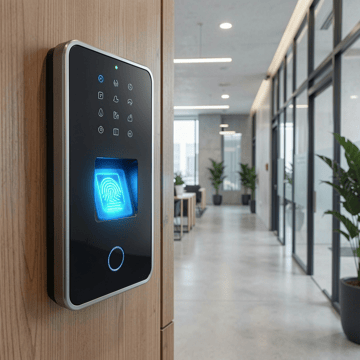
Access control decides who can enter which space: residence halls, laboratories, server rooms, athletic facilities, and administrative offices. Electronic credentials such as swipe cards, proximity fobs, mobile credentials, and biometrics replace mechanical locks on perimeter doors and high-value rooms, and they record every entry so you can review an access history instead of guessing.
Departments rarely have identical needs. Research spaces that handle regulated or hazardous materials may require biometric or multi-factor access, while general classrooms need only simple card entry. The goal is a single, campus-wide access policy that scales across departments and satellite campuses, producing one consistent record of who went where. Real Time Networks systems integrate with leading access control platforms through RTNConnect, so key and asset events line up with door events in the same accountability picture. See how this fits the wider education program.
2. Deploy a campus-wide emergency alert system
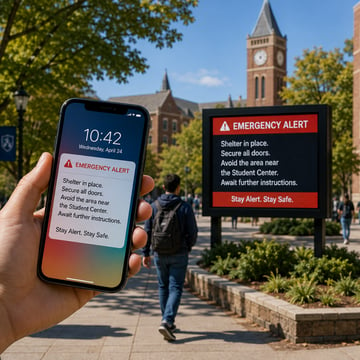
When something goes wrong, the priority is reaching the most people in the least time. Mass-notification tools (SMS, app push, email, desktop takeovers, sirens, and digital signage) do exactly that, and most students and staff carry a phone at all times. Blue-light emergency phones remain a proven way for people in the field to call for help and for officers to be reached anywhere on campus.
Alerts are only half of it. A fast response also depends on staff accountability: knowing who is on shift and which equipment, such as two-way radios and first-aid kits, is checked out and to whom. Assigning clear emergency roles to faculty and staff, and backing those roles with an accurate record of people and gear, turns a broadcast warning into a coordinated response.
3. Centralize key management with electronic key cabinets
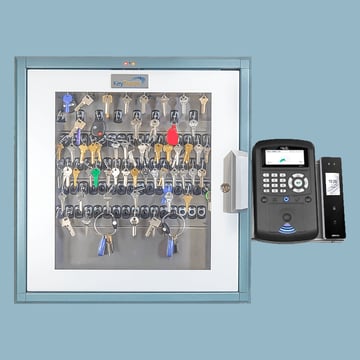
Campuses still run on physical keys, often hundreds to thousands of master and sub-master keys spread across buildings. Manual logs lead to lost keys, expensive rekeying, and real security gaps. Electronic key cabinets such as KeyTracer release each key only to an authorized user, record every removal and return, and raise an alarm when a key is overdue. The result is a clean audit trail and far fewer missing keys, the foundation of a reliable key management program for a campus.
Real Time Networks works with campuses and school districts across North America, and the School Board of Sarasota County shows the payoff. It put electronic key control into practice across more than 50 campuses serving roughly 45,000 students. After replacing manual tracking with KeyTracer cabinets, the district gained real-time visibility into key activity and cut lost-key incidents. Its lead locksmith described the cabinets as “a godsend” for understanding when a school master key went missing. Explore the full approach to campus-wide key management.
The Ultimate Guide to University Security
A practical resource for building campus-wide accountability across departments, campuses, and every type of key and asset. Real Time Networks walks through access control, key management, and smart lockers as one connected program.
Get the Guide4. Track shared devices and equipment with smart lockers
.png?width=304&height=309&name=AT-Educational-Facilities-Product-Page_500x511%20(1).png)
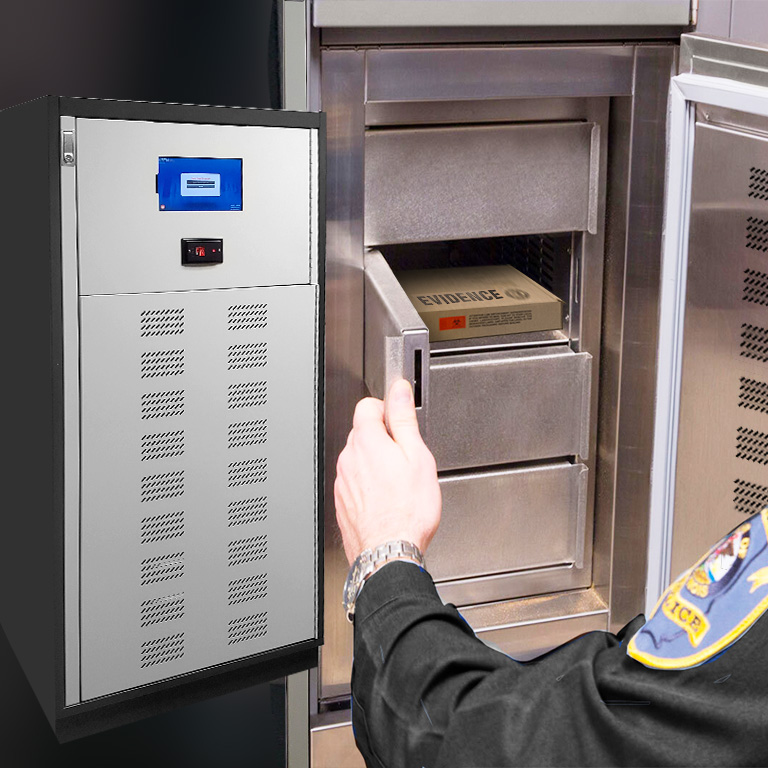
Loaner laptops, tablets, and other shared devices move across campus every day, alongside AV gear, projectors, and security radios. Intelligent lockers such as AssetTracer automate the sign-out and return of those assets, charge devices in the locker so they are ready when needed, and tie every transaction to an authenticated user.
That authentication is what creates accountability. Rather than a paper sheet, you get a complete access and usage history: who checked out each asset, when they took it, and when it is due back. Administrators can see current custody and overdue items at a glance, which protects budgets and keeps equipment available for classes, events, and facilities work. The same lockers can secure higher-risk items, including a security office's two-way radios or less-lethal gear, under the same record.
5. Integrate your security systems on open standards
Buying tools piecemeal is how campuses end up with capable systems that do not talk to each other. Choosing technology that shares data through open standards lets access control, key cabinets, smart lockers, and alerting work as one program rather than as separate islands. Integration also future-proofs the investment, because new systems can be added without ripping out what already works.
This is the role RTNConnect plays: it connects key and asset events to your broader security and IT stack, so a door event, a key checkout, and a device loan can be reviewed together. One integrated record across departments and campuses is far more useful than four disconnected logs.
6. Train staff and keep incident reporting transparent

Security is not only the security office's job. Faculty and staff interact with students far more than officers do, so they need practical training: their role during an emergency, and how to recognize warning signs early. Students themselves are often best placed to keep one another safe, which makes bystander and awareness training worthwhile across the campus community.
Transparent incident reporting reinforces that culture and supports compliance. Modern security systems are constantly logging access, key, and asset activity, and that data can be turned into the reports the Clery Act and other rules require. Beyond regulation, openly sharing what happened and how it was handled builds trust between security staff and the rest of the campus.
How the layers map to Real Time Networks
| Security layer | What it addresses | Real Time Networks fit |
|---|---|---|
| Access control | Who enters which space | Integrates via RTNConnect |
| Emergency alerts | Rapid mass notification | Supports staff accountability |
| Key management | Control of physical keys | KeyTracer electronic key cabinets |
| Asset management | Shared devices and equipment | AssetTracer intelligent lockers |
Sources: FBI CJIS Security Policy (audit logging and one-year audit-record retention) and IAPE Professional Standards (chain of custody and evidence storage).
Build a safer campus, one accountable layer at a time
Improving campus security does not require more spending or more headcount as much as it requires the right tools working together. Real Time Networks has delivered more than 2,000 installations since 2004 and is ISO/IEC 27001 certified for information security, with education-sector deployments across the United States and Canada that bring keys and shared assets under one accountable record.
See how KeyTracer and AssetTracer fit your campus. Book a Demo or explore the Real Time Networks education solutions
Frequently asked questions
-
-
How can colleges improve campus security?
Colleges improve campus security by coordinating several layers at once: access control that records who enters each space, a campus-wide emergency alert system, electronic key management, smart lockers for shared equipment, and trained staff who know their role in an incident. The strongest programs connect these layers on open standards so they share data and produce one clear access and usage history across departments and campuses.
-
What is campus access control?
Campus access control is the set of policies and technology that decide who can enter which spaces, and when. It typically uses electronic credentials such as swipe cards, proximity fobs, mobile credentials, or biometrics in place of mechanical keys for perimeter doors and high-value rooms. Each entry is logged, so administrators can review an access history rather than relying on memory or paper sign-in sheets.
-
How do universities manage keys across multiple buildings?
Universities manage keys across multiple buildings with electronic key cabinets that release each key only to authorized users and record every removal and return. Instead of tracking hundreds or thousands of master and sub-master keys by hand, staff get a single audit trail and automatic alerts when a key is overdue. Syracuse University automated its key control with KeyTracer, and the School Board of Sarasota County applied the same approach across more than 50 campuses.
-
What technology improves student safety?
Several technologies work together to improve student safety: electronic access control, mass-notification and blue-light emergency phones, video surveillance in at-risk areas, electronic key management, and smart lockers for shared devices. The biggest gains come from integrating these tools so an alert, an access event, and an asset checkout can all be reviewed in one place rather than across disconnected systems.
-
How do smart lockers support campus operations?
Smart lockers support campus operations by automating the sign-out and return of shared laptops, tablets, AV gear, and staff equipment. Each transaction is tied to an authenticated user, so the system keeps a complete access and usage history of who took an asset, when, and when it is due back. In-locker charging keeps devices ready, and automated logs replace paper sheets, freeing staff.
-
Bring keys and assets under one accountable record
See how KeyTracer and AssetTracer give your campus a full audit trail of every key and asset, across departments, buildings, and satellite campuses.
Explore Education SolutionsSubscribe to our blog

Share this article